
Body Dysmorphic Disorder (BDD) and Ocular Complaints
The Psychological Impact of BDD
BDD can significantly affect a person’s emotional wellbeing and everyday life. Someone with BDD may avoid social situations, have difficulty concentrating on work or studies, withdraw from relationships, or experience significant anxiety and distress because of their appearance concerns.
BDD is also associated with depression and an increased risk of suicidal thoughts and behaviours. Therefore, recognizing the condition and providing appropriate mental health support is important.
BDD is a mental health condition, and treatment generally focuses on the underlying psychological disorder rather than simply changing the physical feature that the person is concerned about.
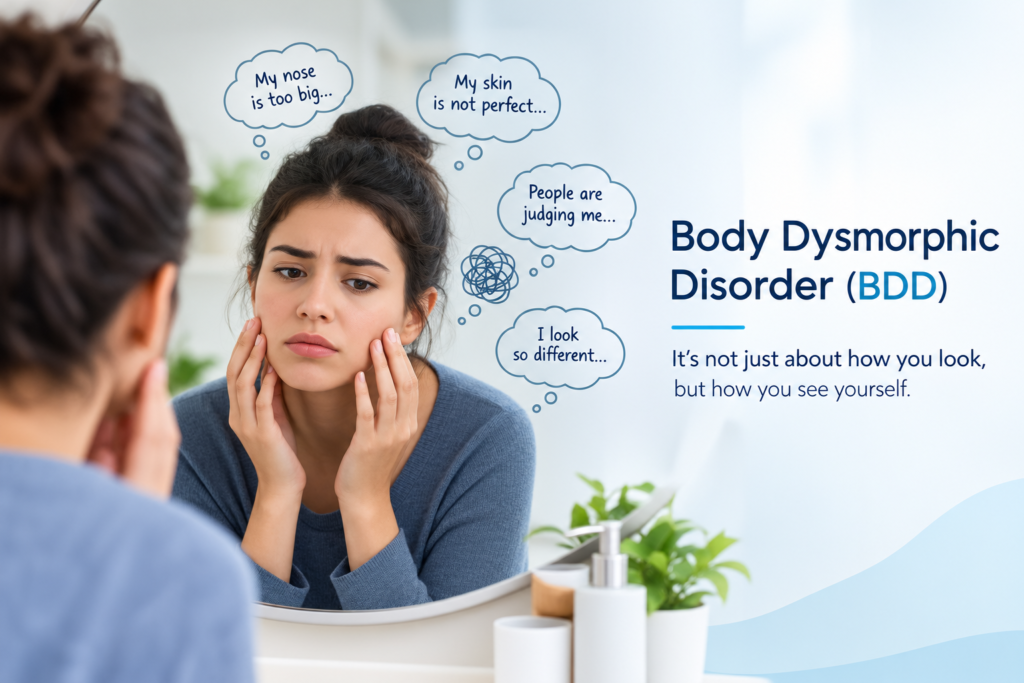
Eyes and Periocular Complaints in BDD
Although BDD can involve almost any part of the body, some individuals may become particularly preoccupied with their eyes or the surrounding periocular area. They may focus on perceived differences in eye size or shape, asymmetry, eyelid position or drooping, dark circles, wrinkles, or fullness and hollowness around the eyes. These concerns may become especially noticeable when looking in mirrors or at photographs.
It is important to understand that these concerns do not define BDD. Rather, they represent one possible area of appearance-related preoccupation in a person with BDD.
People with BDD may also focus intensely on small facial details rather than the overall appearance. As a result, minor or barely noticeable differences may feel much more significant to them. This can lead to repetitive behaviours such as excessive mirror-checking, taking photographs to examine the eyes, comparing their appearance with others, repeatedly touching or examining the eye area, using creams or makeup to conceal perceived flaws, seeking reassurance, or researching cosmetic procedures.
These behaviours may provide temporary reassurance but can reinforce the cycle of appearance-related worry and preoccupation.
Not Every Eye Complaint Is BDD
A concern about the appearance of the eyes does not automatically indicate BDD.
Changes such as genuine eyelid drooping, swelling, redness, pain, visual disturbances, or other physical symptoms may have an underlying medical or ophthalmic cause and should be appropriately evaluated.
Likewise, a person can have a genuine eye condition and also experience BDD. A proper assessment should therefore consider both the physical complaint and the person’s psychological experience of their appearance.
Recognizing When Professional Help May Be Needed
Appearance concerns may warrant further assessment when they become persistent, distressing, or interfere significantly with daily life.
Signs that may indicate a need for professional evaluation include:
- Spending excessive amounts of time worrying about appearance
- Repeated mirror checking or appearance checking
- Significant avoidance of social situations
- Constant comparison with other people
- Repeated requests for reassurance
- Repeated cosmetic procedures without lasting satisfaction
- Significant anxiety or distress related to appearance
- Depression or thoughts of self-harm
BDD is a recognized and treatable psychiatric disorder. Early identification and appropriate mental health care can help reduce the distress and repetitive behaviours associated with the condition.
If a person is experiencing suicidal thoughts or feels at immediate risk of harming themselves, urgent professional help should be sought.
Conclusion
Body Dysmorphic Disorder is fundamentally a mental health condition involving excessive preoccupation with perceived flaws in appearance. The concern can involve many different parts of the body and is not limited to the eyes or face.
For some individuals, however, the eyes and surrounding structures can become the focus of their appearance-related concerns. Understanding this distinction is important so that genuine ocular problems are appropriately assessed while possible BDD is also recognized and addressed.
Note: A comprehensive eye examination, including a retinal assessment, is recommended to screen for eye conditions associated with the above health conditions.
Meet Our Expert
Dr. Shabbir Saifuddin is a Specialist Ophthalmologist with extensive clinical experience in diagnosing and managing a wide range of eye conditions, including glaucoma, corneal disorders, dry eye, allergies, infections, and refractive errors. With experience across leading hospitals in the UAE and international ophthalmic institutions, he combines thorough clinical assessment with a patient-focused approach.
He provides comprehensive eye assessments for both adults and children, including vision testing, glaucoma evaluation, contact lens assessment, and preoperative eye examinations. His clinical approach focuses on accurate diagnosis, personalised treatment, and helping patients maintain long-term eye health. He regularly attends national and international conferences to stay updated with advances in ophthalmology and has also presented scientific papers and contributed health articles to magazines.